Active Love: Grounded as a Mountain
Lately I have been pressing the idea of active love. But when it comes down to practice, how do we actually live it out? Many readers find the farming arc of *Vagabond* tedious, but the more I return to it, the more I am convinced it is the soul of the whole work...
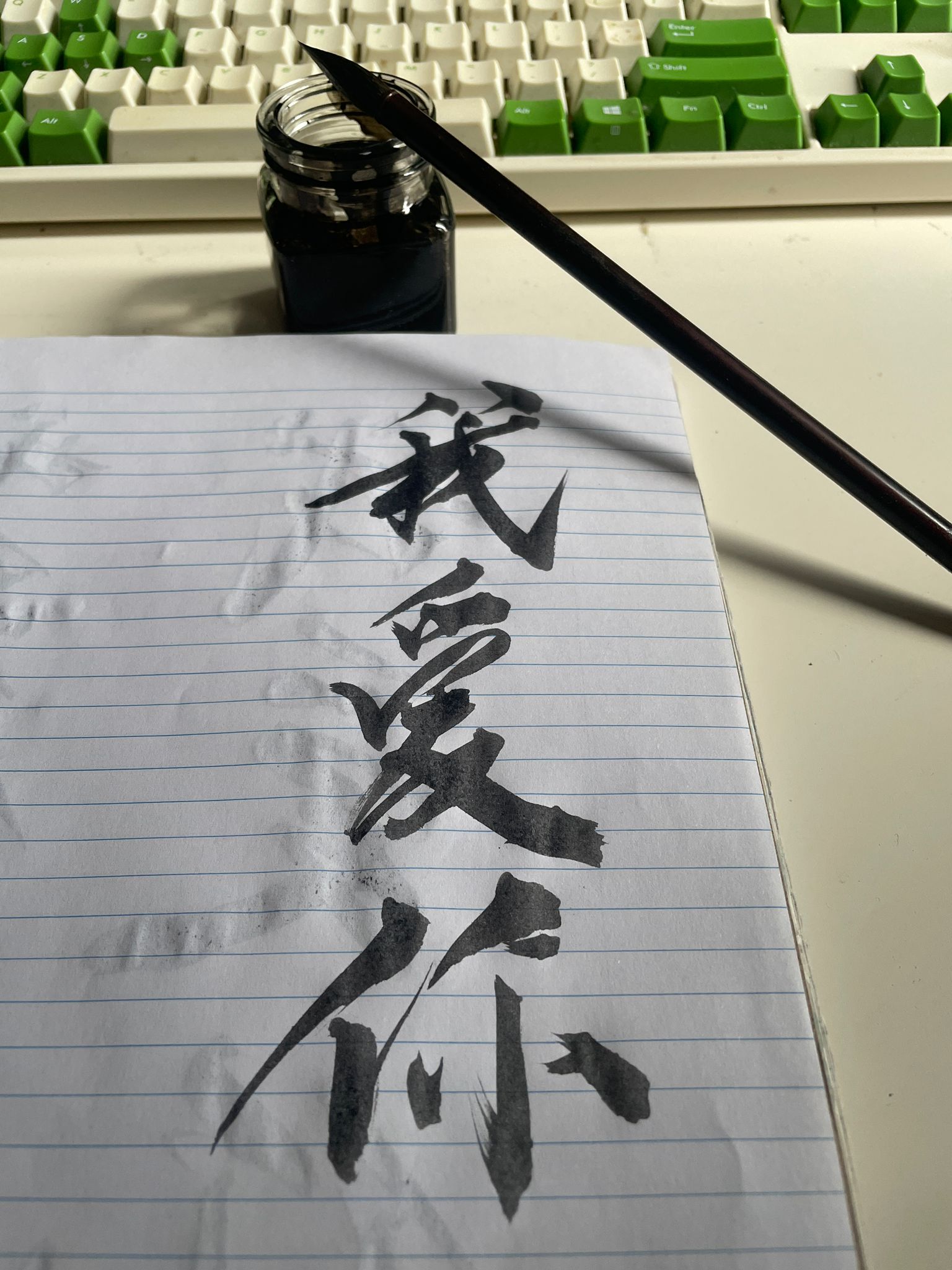
Lately I have been pressing the idea of active love. But when it comes down to practice, how do we actually live it out?
Many readers find the farming arc of Vagabond tedious, but the more I return to it, the more I am convinced it is the soul of the whole work.
It is not merely a build-up to Musashi’s duel with Kojirō on Ganryū Island. It is where Musashi finally grasps what life is. He used to believe that being “invincible under the sun” was a destination he had to reach, a place he was going. But in that village of famine and hunger, he understands at last: there is no need to go anywhere. One sings the song of life on the suffering earth.
This echoes Dmitri Karamazov’s dream on the eve of his arrest, the dream in which he is already bound for Siberian penal labor and asks, “Why do the babes weep?” By the time the question escapes him, his soul has already been remade. No wonder Inoue Takehiko has taken so long to finish the last chapter: he is using his brush to write out his understanding of life. I honestly cannot imagine a higher plane than this.
Active love is the love of the strong. It is a grounded presence.
Before we can practice this love of the strong, we have to be clear about what it is not.
I have been reading Robert Glover’s No More Mr. Nice Guy. I later found that someone renders “Mr. Nice Guy” as xiangyuan, Confucius’s term for the hollow conformist who pleases everyone. It is a stroke of genius.
The fundamental problem with xiangyuan love is dishonesty. Mr. Nice Guy dares not face his own desires and needs, so he packages himself as a selfless giver with no needs of his own. But behind every act of giving lies an invisible contract: every gift must be repaid. At bottom the logic treats people as instruments: coin-slot vending machines.
This is an immoral love. I see it everywhere among Chinese people: in family ethics, in social relations. It lays bare how shaky the philosophical foundation of Chinese society is: at bottom, people are not treated as people.
A while back the tragedy of the Henan bride who threw herself from a building left me shaken. Real life shows us, in the most visceral way, how ideas kill.
So if, when you hear me preach loving others, you assume I am asking you to play the nice guy, that is very wrong. Any love that makes you ashamed of your own feelings and needs, any love that makes you feel obligated to repay, any love that suffocates you while leaving you inexplicably angry: such love is an insult to love itself, a degrading of it.
To practice active love, the first step is to re-establish the self as absolute center: to plant the independent person on a footing nothing can shake.
Loving others is the work of free people. Unfree love, xiangyuan love, is an insult to love. We must refuse it.
Put your own needs first. Before you love another, love yourself.
Kant’s argument for the love of neighbor is interesting, almost geometric. The concept of “the neighbor” carries a factor of distance. In ideal love, every person is our equal and deserves equal respect; but in practice, our love decreases with distance.
So the first task of loving one’s neighbor is to love the one closest to you: yourself.
You must accept yourself without condition, care for yourself, before you have any standing to love others. When you treat others from the overflow of your own love, your love becomes credible. Those who crush themselves into the dust and then pour out exhausting sacrifices to please others offer a love that cuts against both intuition and common sense. It is closer to moral blackmail than to love, and it is hard for anyone to trust.
There is a paradox of good and evil here: a good deed must be chosen. One who has no capacity for evil has no moral credit for his goodness; it is only a by-product of weakness.
English distinguishes between nice and kind.
Nice carries a trace of ingratiation, which is precisely why rendering it as xiangyuan is a stroke of genius: outwardly honest, inwardly pandering, chasing worldly approval and the repayment it brings.
Kind, on the other hand, has a certain objectivity to it. Good and evil are my own free choices, but their standard has the objectivity of physical law: it is discovered, not invented; it is simply there.
We do good in order to enact the highest principle we carry within us (even if people’s understandings of that principle differ). We do not do good to chase the crowd or curry favor with others.
Before loving another, become truly selfish. Accept the real you. Those who can accept their own feelings are strong, confident, alive. That self-acceptance is what lets us embrace our passions and face our fears head-on.
Put your needs first.
This really is worth repeating three times over.
Within your power, do not swallow a single hardship you do not have to swallow. Do not listen to a single cutting word you do not have to hear. The people you dislike: delete them.
A thought struck me recently that I am eager to test in practice:
Use every means at my disposal to satisfy even the smallest of my own needs.
I suspect this may be a decent cure for the void. I’ll run the experiment and report back.
What is the ideal form of all this?
As I understand it, it is a presence grounded like a mountain.
In a world of disorder, we finally become calm. We sink roots into the deepest earth. At last we hold a small domain of order that is ours.
We no longer need other people’s approval or judgment. We have found our place. The unmoving core of that place is the highest good we carry within. We no longer drift like duckweed on the current.
The outer world rarely bends to what we will, but its wild storms can no longer shake what is inside. Our inner world gives us the order of our existence.
Xiangyuan love is, at its root, the fear of extinction. Everything the xiangyuan does comes down to manipulating the environment (other people included) in order to escape death, whether biological or social.
Active love, by contrast, is the courage to be. It is the light of will that we, as sovereign individuals, having looked clear-eyed into the void and the chaos of the cosmos, still choose to cast into the abyss. It is the labor of carving order out of chaos.
This is the love of the strong.
References
- Inoue Takehiko, Vagabond (Kodansha)
- Robert Glover, No More Mr. Nice Guy
- Dostoevsky, The Brothers Karamazov
- Kant, The Metaphysics of Morals

Writes from Amsterdam on Kant, Dostoevsky, and the moral life. About →